
Deep Dive
Sod Installation Services
— Jesup, GA
New lawn installation — Jesup, GA. Centipede sod laid over properly tilled and graded soil, with tight seams and thorough rolling to create even coverage, strong soil contact, and a clean, professionally finished lawn.
01 — Quote by Area & Preparation
Sod Installation
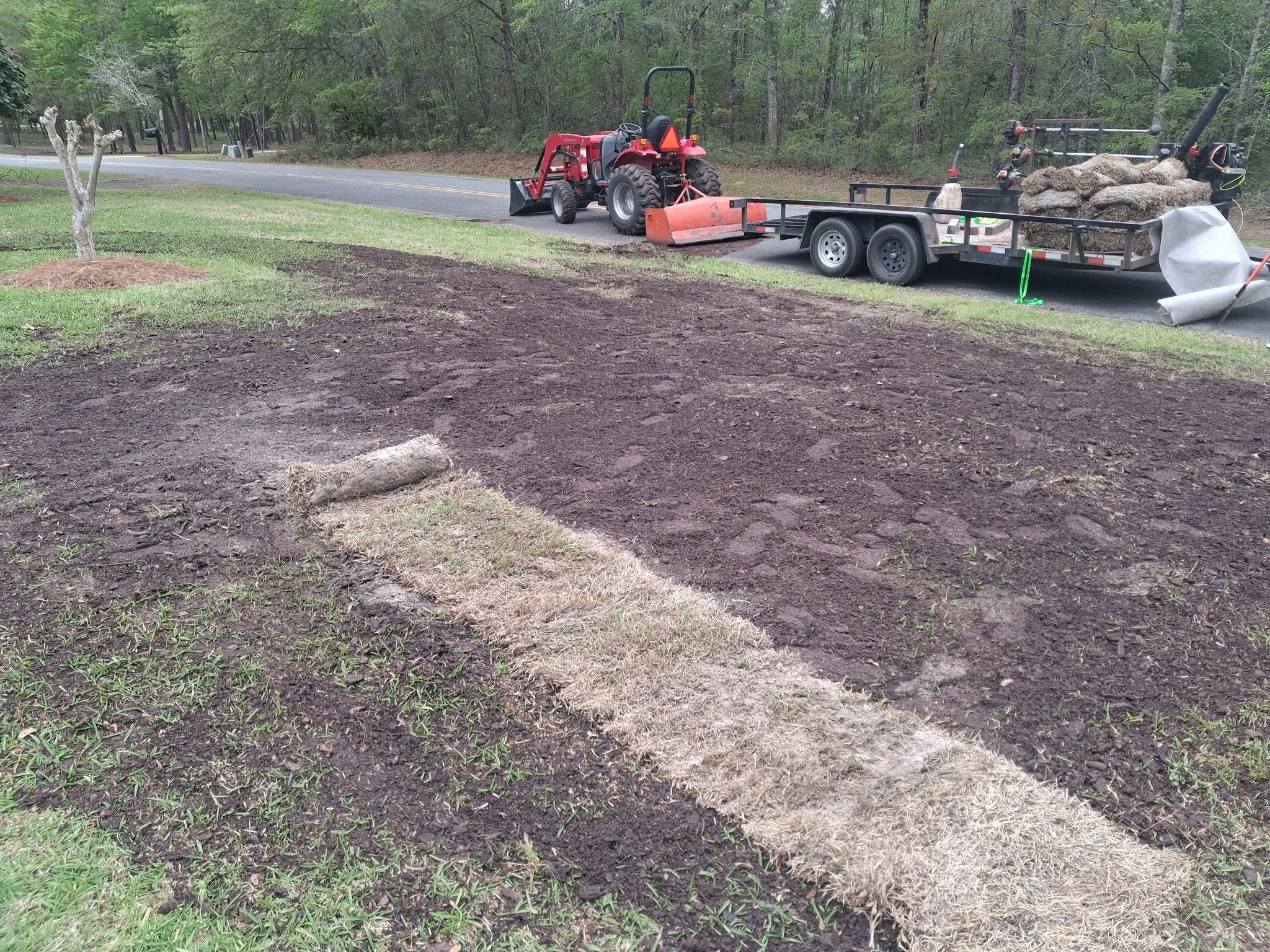
Sod changes a yard immediately, but the finished lawn is only as good as the surface underneath it. In Jesup and surrounding areas, we install fresh sod for properties that need new lawn coverage, replacement turf, repaired bare areas, or a complete lawn reset.
The process begins with getting the ground ready. Existing grass or unwanted material may need to come out, low or uneven areas may need attention, and the soil must provide a workable surface before fresh sod can be fitted into place.
Once preparation is complete, sod is laid tightly across the designated area and carefully fitted along curves, beds, walkways, and other boundaries, turning unfinished ground into a continuous lawn without waiting for seed to fill in.
02 — Quote by Existing Turf & Groundwork
Lawn Preparation &
Old Turf Removal
Replacing a lawn means dealing with what is already there before anything new can take its place. Worn grass, weeds, leftover roots, and uneven patches are removed so they don’t interfere with the fresh sod going over the area.
Getting down to workable soil is only part of the process. The existing ground may have dips, compacted sections, leftover organic material, or rough spots that need attention before the surface is ready for installation.
How much old turf needs to come out affects the amount of preparation involved. After removal, the installation surface is cleaned up and shaped into a more consistent base, giving each piece of sod a better place to sit from the moment it is installed.
03 — QUOTE BY Layout & Coverage
Sod Laying & Final Fit
Each section of sod must be placed, fitted, and trimmed to create continuous coverage across the lawn. Four details influence
how the installationcomes together:
Approach
How Much Sod Work Is Needed?
Sod projects can range from repairing a small section to replacing an entire lawn.
Here’s how each tier changes as the installation area and preparation become more involved.
PROJECT TIER
SPOT SOD REPAIR
Smaller lawn sections that need fresh sod without full replacement
Replaces bare, thin, or damaged sections of existing lawn
Limits installation to the areas where new turf is needed
Requires less removal and ground preparation than larger projects
Blends repaired sections into the surrounding lawn where possible
Common for: bare patches, damaged turf, small lawn sections, targeted grass replacement
PROJECT TIER
PARTIAL LAWN REPLACEMENT
Larger sections of worn or damaged grass replaced with fresh sod
Removes failing turf across designated areas of the lawn
Prepares exposed ground before new sod is placed and fitted
Restores broader sections where spot repairs are no longer practical
Provides substantial new coverage without replacing the entire yard
Common for: widespread bare areas, damaged lawn sections, uneven turf, partial yard replacement
PROJECT TIER
COMPLETE LAWN INSTALL
Full lawn transformation with new sod across the entire designated area
Removes existing turf and unwanted surface material as needed
Prepares the ground throughout the full installation area
Fits fresh sod around beds, walkways, edges, and other boundaries
Delivers the most extensive level of sod coverage and preparation
Common for: new lawns, severely damaged turf, bare yards, complete grass replacement
Density Tier
Light Brush
Trees under 4" diameter, heavy scrub
Forestry mulcher handles most of it in one pass
Faster mobilization — often done in a day per acre
Kudzu or thick vines add time regardless of tree size
Typically the most straightforward quote to scope
Common in: recently abandoned fields, overgrown pasture, roadside strips
Density Tier
Mixed Timber
Trees 4–12" diameter, varied density
Mix of mulching and chainsaw work required
Larger trees need multiple passes or traditional felling
Hardwoods (oak, sweetgum) are slower than pine
Most residential wooded lots fall in this range
Common in: residential lots, secondary growth, older fields
Density Tier
Dense Hardwood
Trees 12"+ diameter, mature canopy
Traditional clearing and chainsaw crew required
Significant debris haul-off or on-site processing
Stump removal adds scope — grind or pull decision
Mature hardwood is the most labor-intensive tier
Common in: old-growth lots, farmland edges, timber tracts
Sod Installation Options
Lawn Installation Methods
ADVANTAGES
- Creates immediate, consistent lawn coverage
- Provides a finished appearance without waiting for seed
- Covers large bare or prepared areas efficiently
- Fits cleanly around beds, walkways, and lawn edges
CONSIDERATIONS
- Ground preparation is important before installation
- Fresh sod requires consistent watering while establishing
- Installation needs vary with lawn shape and conditions
Best for: Bare yards, new lawns, complete turf replacement, and properties needing immediate grass coverage.
ADVANTAGES
- Targets damaged sections without replacing the entire lawn
- Restores bare or worn areas with fresh grass coverage
- Preserves healthy turf that can remain in place
- Works well for isolated sections needing improvement
CONSIDERATIONS
- New sod may initially differ from established grass
- Existing turf condition affects where replacement makes sense
- Irregular areas can require additional cutting and fitting
Best for: Bare patches, damaged turf, worn lawn sections, and properties where healthy grass can remain.
Bare Ground to Green Lawn,
Done Right From the Start.
A great-looking sod installation is decided before the first piece ever touches the ground. Proper preparation, careful placement, tight seams, and clean edges all contribute to how the finished lawn comes together. We give each stage the attention it needs so fresh sod starts with a solid foundation.
Common Questions
FAQ
Can sod be installed over my existing grass?
Usually, the existing turf and unwanted growth should be removed first. Sod needs good contact with the prepared ground underneath rather than sitting on top of an established layer of grass.
How soon can I walk on newly installed sod?
New sod needs time to establish roots before handling regular foot traffic. Keeping unnecessary traffic off the lawn during this early period helps prevent pieces from shifting or developing uneven areas.
How should I water my lawn after sod installation?
Fresh sod requires consistent moisture while its roots begin establishing in the soil below. Watering needs can vary with weather, soil conditions, and how quickly the lawn begins taking root.
Will the seams between pieces of sod disappear?
Properly fitted sod starts with tight seams, but some lines may still be visible immediately after installation. As the grass establishes and grows, the individual pieces should develop a more continuous appearance.
Can you replace only the damaged parts of my lawn?
Yes. If healthy turf can remain, sod can be installed in selected bare, worn, or damaged sections rather than replacing the entire lawn. The condition and layout of the existing grass will determine whether partial replacement makes sense.
Ready to Break Ground?
Free on-site quotes across Lancaster County and the Charlotte metro. No pressure, no obligation.
Happy With Our Work?
A quick Google review helps other homeowners find us and means the world to a local, owner-operated crew.
Landscaping & Lawn Care —
Jesup, GA to Blackshear, GA
Navigate
Services
Contact
Waters, Lawn & Garden
Jesup, Georgia
9:00AM-5:00PM


Service Area
Jesup, GA · Ludowici, GA · Walthourville, GA · Hinesville, GA · Glennville, GA · Baxley, GA ·Blackshear, GA
© 2026 Waters, Lawn & Garden · All rights reserved